Pages

Showing posts with label Detroit. Show all posts

Monday, April 4, 2022

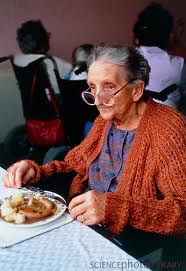
Nursing Home Mealtimes With Dementia

"Food? What food?"

At nursing home mealtimes, I served as a hospice volunteer at several Detroit, Michigan nursing homes for many years. Hospice residents are predicted to have up to six months to live, but may exceed that time. I had contact often with residents who were assigned or not assigned to me. My assigned hospice residents were always my primary concern. Most of them shared rooms with up to three people. 

In the mealtime stories below, I shared a table with six other residents. Several were living with some form of dementia. Due to limited staff, I knew I would have to supervise, encourage, and generally keep an eye on everybody at the table. A Detroit, Michigan public school principal, I was used to multi-task management and didn’t mind assisting them weekly after school at all. These stories from my book Becoming Dead Right: A Hospice Volunteer in Urban Nursing Homes describe typical mealtime experiences with residents living with dementia:

I continued talking to Naomi, my assigned hospice patient, and assisting her while monitoring others at the table. I noticed that Petra had not touched any of her food. Petra was not a very independent eater, but I knew she was physically capable of feeding herself by any means necessary.

“Petra, your food is just sitting there getting cold. You have a whole tray of delicious things to eat. You should eat some and see how good it is. You’re a good eater. Eat your food.”
“Food? What food? I don’t have none.”
“The food on this tray is all for you, Petra. This is your food tray right in front of you. Watch me point to each item. You have coffee, juice, milk, mashed potatoes, fish, broccoli, bread, and fruit. That’s your name spelled P-e-t-r-a.”
“That’s not my name. My name is Petra. That’s somebody else’s name. That’s not my name. I know my name.”
“Well, that is still your food on the tray. You should eat before it gets cold. Go ahead and eat. Give it a try.”
“Eat? Eat what?”
“Your food, Petra, your fish, potatoes, and everything else.”
“Fish? What fish? I don’t have none. Do you see a fish here? I don’t see a fish. I don’t have none.” 

From previous experience, I knew that Petra and I could go on roaming forever around this same circle. Fortunately, she was sitting next to me. I gave her a taste of the fish first because I knew she liked it. Then I placed her fork in her hand and started her off eating. I did this in steps by steering her hand and giving her directions on putting food into her mouth, chewing, and swallowing. Residents with dementia often needed tasks broken into simple steps. Usually, she ate for a while by herself, even with her hands, once I started her off. But without any help getting started, she would sit and look at the food she said was not there. My other hand continued to assist Naomi, the resident assigned to me. My eyes monitored everybody at the table.

“Don’t do that! Leave my food alone! Get your nasty hands off my plate! Help! Can somebody help me?” screamed a resident at our table as if she were under attack. All the nurse aides were occupied feeding residents at other tables and experiencing their own mealtime problems. As the  unofficial table captain, I told Roscoe sternly to leave Charlena’s food alone. He gave me a confused look, pretended he didn’t know what I was talking about, but betrayed himself with a silly grin he thought I didn’t see. I leaned across the table and directed his attention to his own plate by putting his spoon in his food. He picked up his spoon and started eating again. Then I reassured Charlena that everything was okay, and she could finish eating. Charlena smiled with an air of triumph. Roscoe was in trouble, and she enjoyed knowing she helped to get him there.

Rita had been watching me help Naomi and Petra eat. Imitating me, she was attempting to feed George, but with her own used utensils. George had his mouth open obligingly to help. I interceded before any damage was done. By this time, several residents had spilled food on the table or the floor and had food stains on their bibs. Petra had to be restarted twice to eat the food she insisted she had never received. I had stood to lean across the table twice to settle other table disputes involving food and different residents.

Naomi ate quietly during all the interruptions. I had been giving her ongoing praise on how well she was doing. I also praised others at the table when they did well. They savored the attention, and Naomi wasn’t the least bit jealous. She had already told them that I was her guest and even offered me food which I declined. I had not gone there to eat and could not think about eating if I had. 

When one resident was praised, another would often say, “Look at me! I’m eating, too!” This reminded me of students at my PK-eighth grade school. They said the same thing when someone else was praised. I laughed, thinking the world was a universal classroom. Maybe the stars in the sky were created to be placed on foreheads of people around the world when they did something praiseworthy.

© Frances Shani Parker, Author, Becoming Dead Right: A Hospice Volunteer in Urban Nursing Homes

Frances Shani Parker, Author
Becoming Dead Right: A Hospice Volunteer in Urban Nursing Homes is available in paperback and e-book editions in America and other countries at online and offline booksellers. Visit Frances Shani Parker's Website.

Wednesday, August 5, 2009

Video Poem: “Living Colors” (Nursing Home, Staff Shortage, Poor Vision, Alzheimer’s Disease, Hospice) 2:56 mins.

“Living Colors” is one of sixteen original poems included at the end of each chapter of "Becoming Dead Right: A Hospice Volunteer in Urban Nursing Homes.” With poems, stories, and general information, "Becoming Dead Right" explores urban nursing homes, hospice care, caregiving, dementia, death preparations, and bereavement. Strategies for improving eldercare and nursing homes are examined.

This poem was inspired by one of my hospice patients who had Alzheimer’s disease and poor eyesight. More sight problems could be corrected in nursing homes if residents received vision care regularly. My patient needed assistance to eat, but there was a staff shortage that day. Staff shortages in nursing homes negatively impact patients across the country. Using her fingers, she started feeding herself. I arrived to find her with food smeared around her mouth. After wondering what that experience might have been like for her, I wrote this poem:

Living Colors


Frances Shani Parker, Author
"Becoming Dead Right: A Hospice Volunteer in Urban Nursing Homes”
“Hospice and Nursing Homes Blog”

Wednesday, July 22, 2009

Video Poem: “Reflections of a Hospice Volunteer” (Hospice, Nursing Homes, Eldercare) 3:25 mins.

“Reflections of a Hospice Volunteer” is one of sixteen original poems included at the end of each chapter of "Becoming Dead Right: A Hospice Volunteer in Urban Nursing Homes.” With poems, stories, and general information, "Becoming Dead Right" explores hospice care, urban nursing homes, caregiving, dementia, death preparations, and bereavement. Strategies for improving eldercare and nursing homes are examined.

Dedicated hospice volunteers everywhere enhance quality of life during patients’ final days. This poem expresses the win-win experience of many volunteers.


Frances Shani Parker, Author
"Becoming Dead Right: A Hospice Volunteer in Urban Nursing Homes”
“Hospice and Nursing Homes Blog”

Saturday, September 1, 2007

Detroit Hospice Volunteer Book Review By Dr. Naomi Long Madgett: Becoming Dead Right: A Hospice Volunteer in Urban Nursing Homes


Book Reviewer: Dr. Naomi Long Madgett - Teacher, Editor, Publisher, and Poet Laureate of Detroit, MI
Book: Becoming Dead Right: A Hospice Volunteer in Urban Nursing Homes
Author: Frances Shani Parker, www.francesshaniparker.com


Before I read this non-fiction book, I knew very little about hospice care. I thought a hospice was an establishment where patients with only a short time to live went to die. They were kept as comfortable as possible in pleasant surroundings where family members could spend unlimited time with them. I knew several people who were released from the hospital to hospice care at home during their last days. But I was not aware of any other hospice situations. My knowledge of hospice care has increased greatly.

This book is divided into two sections. The first is titled "Everybody’s Story, Ready for the Telling" and consists of nine chapters. The second section, "Footsteps to Caregiving, Death, and the Future of Hospice," consists of seven chapters. Each chapter ends with a related, well-crafted, original poem by the author.

In the first section, readers are introduced to true stories involving a series of unique individuals. They motivate Ms. Parker, a public school principal, to become a certified hospice volunteer and interact with her during her years of service in Detroit nursing homes. She brings these individuals vividly to life, like characters in a good novel, and makes readers feel that they are present during every situation. Topics such as nursing homes, dementia, pain management, and death are covered in an easily understood manner.

Hospice care, I learned, focuses on a holistic approach to caregiving and supports the dying and their families through high-quality patient care physically, emotionally, socially, and spiritually. The volunteer provides companionship, assistance with normal tasks, and advocacy for patients. Ms. Parker realizes that, although her specific assignments target hospice patients, her compassion extends to other patients. Interesting references to her upbringing in New Orleans, Louisiana enhance her storytelling. She is a dedicated volunteer with a deep understanding of human nature and an intuitive sense of what to do to make death as peaceful and satisfying as possible.

The second part of the book shares information that caregivers can use before, during, and after a loved one dies. Various death rituals and bereavement supports are mentioned. This guidance is helpful to all readers, even those who are young and in excellent health.

Improvements needed in hospice and nursing homes in general are examined. Recommendations include better implementation of the hospice philosophy, upgrading of nursing home conditions and procedures, and the elimination of racial and ethnic healthcare disparities. A significant and original comparison is made between schools and nursing homes. The similarities are remarkable in terms of patients’ and students’ needs, employees’ duties and accountability, and methods that promote success. Service-learning partnerships between schools and nursing homes are encouraged.

The final chapter, "Baby Boomer Haven," consists of an imaginary tour guide escorting readers through a wonderful nursing home. The environment and procedures described during the tour are based on best practices of nursing homes that actually exist today. These practices are lacking in many nursing homes in America. This tour provides a very appropriate conclusion to a fascinating book. A bibliography, resources, and an index follow.

Reading this book was extremely enlightening. Not like any other book I have ever read, it is so interesting and well written that I could hardly put it down. While maintaining universal appeal, perspectives of people of color are emphasized. I highly recommend this book for every individual who has ever experienced the illness and death of a loved one or who ever will. That includes everyone.

© Naomi Long Madgett, Ph.D.

______________________________________________________

Becoming Dead Right (Scary Hospice Volunteer Book Review)


Many people avoid talking, writing, or even reading about the end of life. This reluctance to face death is reflected in this review of Becoming Dead Right by a reader who thinks death is her enemy: https://www.linkedin.com/pulse/scary-hospice-volunteer-book-review-frances-shani-parker?trk=mp-reader-card

____________________________________________________
More Praise for Becoming Dead Right: A Hospice Volunteer in Urban Nursing Homes from Roger Woodruff, Director of Palliative Care, International Association for Hospice and Palliative Care, Austin Health, Melbourne, Australia

"A school principal and hospice volunteer, Frances Shani Parker relates her experiences with dying people in nursing homes. The second part of the book is about what we as individuals and as a society must do to improve things for those who are dying. I particularly enjoyed the guided tour, conducted from a wheelchair, of Baby Boomer Haven."

_______________________________________________________

Book Endorsements:

Dr. Peter Lichtenberg - Director, Institute of Gerontology, Wayne State University, Detroit, MI
Alice Hedt - Director, National Citizens Coalition for Nursing Home Reform
Karyne Jones - President, National Caucus and Center on Black Aged
Dr. Naomi Long Madgett - Editor, Publisher, and Poet Laureate of Detroit, Michigan
Dr. James C. Kielsmeir - President, National Youth Leadership Council
Nelda Brown - Executive Director, National Service-Learning Partnership at the Academy for Educational Development

_________________________________________________________
Frances Shani Parker, Author
Becoming Dead Right: A Hospice Volunteer in Urban Nursing Homes is available in paperback and e-book editions in America and other countries at online and offline booksellers.
Hospice and Nursing Homes Blog