Pages

Friday, September 23, 2011

Want Hospice Care? Refer Yourself. (Video 3:11)

How do you get hospice care? The usual response to this question is that you have to be referred, and doctors have to sign off to make it official. Many people assume this means a family member or a healthcare professional must initiate the referral procedure. Wrong. You can refer yourself.

Maria Hodges suffered for many years with emphysema. Eventually, her body deteriorated to a point where she knew she was dying and couldn’t handle it alone. She went to the Hospice & Palliative CareCenter in North Carolina and referred herself. Her biggest surprise was her discovery that they would treat her in her own home. This is Maria’s story about “the hospice touch” that made her feel cared for and safe after she referred herself:


Frances Shani Parker, Author
Becoming Dead Right: A Hospice Volunteer in Urban Nursing Homes is available in paperback at many booksellers and in e-book form at Amazon and Barnes and Noble booksellers.

Thursday, September 15, 2011

Intergenerational Volunteering Relieves Dementia Stress (Research, Video 1:38)


I watched them playing together, both mesmerized by the rolling magic of a colorful ball slowly passing between them. One was two years old, and the other was eighty years old with dementia. I couldn’t help but smile. They had discovered the bridge that eludes many of the wisest and most educated.

The bridge is that universal connection between two people that makes them one in the moment. Too often, it is assumed that people with dementia, who may not even recognize their own children, are no longer capable of truly connecting as volunteers for others. Thoughts of having them improving their quality of life while performing intergenerational service can easily be dismissed. That’s when we have to be reminded about the bridge. The Department of Humanities at Penn State College of Medicine did just that when they set out to research whether an intergenerational volunteering intervention could enhance quality of life for persons with mild to moderate dementia.

This research involved fifteen participants forming intervention and control groups. Volunteering in hour-long sessions with kindergarteners and older elementary students, intervention group members participated in alternating weeks over a five-month period. Data were collected and analyzed regarding their cognitive functioning, stress, depression, sense of purpose, and sense of usefulness.

Results indicated significant decrease in stress and improved quality of life in three main areas: perceived health benefits, sense of purpose, sense of usefulness, and relationships. Results didn’t mention the bridge, but I know it was there. That’s what the bridge does when appropriate opportunities are created for it to transform lives.
In this video from the Alzheimer’s Society (UK), Lesley, who has dementia, has been fortunate in discovering many bridges that improve the quality of her life. She discusses her previous work with children, her current volunteering with learning disabled adults, and the “lucky” moments that inspire her to be herself.


Frances Shani Parker, Author
Becoming Dead Right: A Hospice Volunteer in Urban Nursing Homes is available in paperback at many booksellers and in e-book form at Amazon and Barnes and Noble booksellers.

Wednesday, September 7, 2011

Ground Zero Poem: Hotel Room View


Photo By Frances Shani Parker

Like many others, I felt compelled to visit Ground Zero in New York City after the September 11, 2001 terrorists’ attacks on the World Trade Center. I requested a hotel room with a view overlooking the excavation. An aura of heartache permeated the air, while numerous memorial displays comforted those who sought healing. After taking this picture, I wrote these poetic reflections:

Ground Zero

Scattered images of causalities,
thousands of love notes
blanket a former battlefield.
Whispered memories,
flowered tributes coax
closure of doors left ajar by trauma.

From my hotel window, I watch               
the Ground Zero real-time movie
of a 21st century grave excavation
where the World Trade Center
stood and fell, a kindling target
for terrorists’ fires.

Hills with human remains
transport like treasures
to a Staten Island landfill.
Conveyor trucks beep
warning chants of danger
to a world in global doom denial.

I view the sixteen-acre hole
in the heart of a grieving nation,
listen to victims’ voices
share their haunting horror:
“We fought to live and love
trapped in a fatal inferno,
marooned in a tomb of ruins.
We nursed at the breast of fear
until our spirits were free.”

© 2002 Frances Shani Parker
From Becoming Dead Right: A Hospice Volunteer in Urban Nursing Homes


Frances Shani Parker, Author
Becoming Dead Right: A Hospice Volunteer in Urban Nursing Homes is available in paperback and e-book editions at many booksellers in America and other countries.
Hospice and Nursing Homes Blog

Friday, September 2, 2011

Training Hospice-Palliative Volunteers for Cultural Competence (Research, Video 1:42)

Hospice-palliative volunteers and other healthcare workers can operate with a higher level of confidence and efficiency when they display cultural competence during their interactions with diverse patients. This competency is greatly needed to foster increased participation of ethnic groups that continue to underutilize hospice-palliative services.

A study in the Greater Toronto Area (GTA) examined the current state of culturally competent care. Using 14 hospice volunteers, researchers from the Department of Sociology at McMaster University did in-depth interviews with them to gain more understanding about their cultural competency status and challenges such as misunderstandings resulting in hurt feelings. Volunteers revealed the following in their responses to the questions:

1)   Volunteers with weak levels of cultural competence said they encountered cultural clashes with patients.

2)   Volunteers revealed that they needed more education in cultural competence as part of their hospice training.

3)   There was a lack of ethnic, cultural, and linguistic diversity among the hospice volunteers.

While this research was done with a small group, it serves as an example to hospice-palliative organizations and other healthcare institutions that cultural competence issues must be addressed. Ongoing staff education is a necessary component for the successful delivery of healthcare. In addition to improving patient-staff relations, eliminating cultural insensitivity and miscommunication will positively impact patients’ quality of life.

This video explores the importance of cultural competence training for workers in a cross-cultural healthcare environment. Examples of various cultural groups and how to interact with them are explained:


Frances Shani Parker, Author
Becoming Dead Right: A Hospice Volunteer in Urban Nursing Homes is available in paperback at many booksellers and in e-book form at Amazon and Barnes and Noble booksellers.

Friday, August 26, 2011

A Nursing Home is Like a School: Person-Centered Culture Change (Video 3:06)

I started hospice volunteering in Detroit nursing homes while I was a public school principal. It didn’t take long before I observed that nursing homes and schools have several important similarities. Both have cultures that impact people in institutions. A paradigm shift in how some of these institutions are often perceived, not only by the public, but also by those who work in them, is long overdue. This needed transformation is often referred to as person- centered culture change, a movement that focuses on values and practices that respect the input of everyone involved with the institution. Through the eyes of an educator, I will mainly address culture change regarding residents.

In order for a person-centered climate to fully enhance quality of life in nursing homes and other residential institutions for older adults, residents must have experiences similar to what students should have in schools. Like students, residents must first know that the nursing home is a real “home” where they are welcomed and cherished at all times. They must feel that their environments are safe, that trustworthy employees care about them and listen to them with their hearts. Residents must know that their progress as individuals with specialized needs is the primary motivation for everything that goes on. Those with dementia should be challenged to learn new skills in non-threatening ways.

Residents must know that the personal histories they bring matter. These life stories help create who they are, not labels used to judge them and put them in stereotypical categories during their later years. They need ongoing encouragement to use their strengths in productive ways to improve their self-esteem and enhance lives of others. Their talents and accomplishments should be shared with the larger group so they can be appreciated and praised. Finally, their “graduations” (deaths) should be recognized as revered events.

For many institutions, person-centered culture change may seem overwhelming. But the rewards are immense when sincere efforts begin with everyone’s ongoing commitment to succeed. 

Frances Shani Parker, Author
Becoming Dead Right: A Hospice Volunteer in Urban Nursing Homes is available in paperback at many booksellers and in e-book form at Amazon and Barnes and Noble booksellers.

Friday, August 19, 2011

Ten Steps to Being a Great Hospice Volunteer


Ten Steps to Being a Great Hospice Volunteer
By Frances Shani Parker, Author

1)   Remember why you serve.

There’s a reason you feel compelled to enhance lives of the terminally ill. Cherish that inspiration. Move forward committed to an amazing and rewarding healthcare adventure.

2)   Believe it’s all win-win.

Providing end-of-life service is a privilege, not a calling to be a savior. You and those you support come together in relationships of mutual healing and growth. Honor your win-win journey.

3)   Be present.

By all means, show up. But be present with patients after you arrive. Evaluate appearances, behaviors, surroundings, and interactions with others. Listen with your heart. Even silence speaks. Really try to understand living from their perspectives. Focus on advocacy for improving their quality of life.

4)   Try other doors.

Patients will have challenges such as dementia that may not respond to your usual front-door communication. Try other doors and even windows. Obstacles are enrichment opportunities in your partnerships with patients. Touch, music, pictures, stories, and fantasies are a few entry points. Let patients help you navigate your way into their world.

5)   Know your piece in the puzzle.
 
Adherence to rules of protocol and professional ethics should be routine. Be aware of boundaries such as confidentiality regarding yourself, your patients, and their loved ones. Follow guidelines of your hospice organization, and seek help when needed.

6)   Untie your knots.

There may be times of doubt, confusion, sadness, and guilt. These are normal knots of the caregiving process. Untie them by seeking support for your total well-being. Maintain proper rest, nutrition, exercise, and balance in your life. Do your best. Don’t be surprised when you discover reasons to kiss yourself.

7)   Spread the word.

Be knowledgeable about hospice and palliative care. Share information so others can benefit from these specialized areas of healthcare. Encourage involvement in hospice and palliative care career and service activities.

8)   Pick up a turtle.
 
If you see a turtle sitting on a fence post, you know somebody helped to put it there. Be on the lookout for turtles aiming for fence posts. Be a role model for other volunteers. Participate in organizations, conferences, workshops, and discussion groups where you can share best practices while learning new ideas.
   
       9)   Write death sentences.

Death will come no matter how often you avoid it or wrestle it to the ground. Have your advance directives, finances, and property in legal order. Urge others to do the same. Don’t burden loved ones later with important decisions you can record now. As you unfasten yourself from this life, be satisfied knowing your death sentences will be carried out according to your wishes.
  
    10)  Expect rainbow smiles.
 
Rainbow smiles hug you so tightly you can feel ribs of joy press against your essence. Hospice volunteering provides ongoing experiences for you to positively impact lives. When you do, rainbow smiles will come.

© Frances Shani Parker

You can read about my personal journey in becoming a hospice volunteer without realizing I was one here: https://www.linkedin.com/pulse/hospice-volunteer-me-frances-shani-parker?trk=mp-author-card

Frances Shani Parker, Author
Becoming Dead Right: A Hospice Volunteer in Urban Nursing Homes is available in paperback and e-book editions in America and other countries at online and offline booksellers.

Thursday, August 11, 2011

Should Loved Ones Watch CPR (Cardiopulmonary Resuscitation)? (Research, Video 2:13)

Your loved one is in the throes of cardiac arrest. Tension engulfs the air as medical personnel proceed to perform CPR. Should you be allowed to watch? Do you even want to? Many will say you shouldn’t watch because of possible anguish and confusion involved. Some medical personnel may be concerned about liability and possible interference by you or family members witnessing this traumatic event.

But research supports having family members present. Witnessing CPR of a loved one helps observers understand the severity of the situation, appreciate the care being given, and even supports healthy grieving by confirming that everything was done.  With the development of appropriate policies and proper training of staff, the presence of family members during CPR can be a fulfilling experience.

This video shares positive views on this topic from Dr. Tammie Quest, Director of Education in Palliative and End-of-Life Care - Emergency Medicine Project, Associate Professor, Department of Emergency Medicine, Emory University School of Medicine:


Contact your local American Red Cross for CPR training.

Frances Shani Parker, Author
Becoming Dead Right: A Hospice Volunteer in Urban Nursing Homes is available in paperback at many booksellers and in e-book form at Amazon and Barnes and Noble booksellers.

Friday, August 5, 2011

Hospice and Hispanics: Doctor-Patient Communication (Research, Video 2:52)

Cultural values play an important role in how racial-ethnic populations make decisions regarding terminal illness, caregiving, end-of-life experiences, and hospice participation. Communication is a critical factor in delivering information that can be understood in the context of these values. Doctors and their background training must reflect general cultural knowledge of racial-ethnic groups in order to communicate well with them, always keeping in mind that there are differences within populations.

With a focus on Hispanics, researchers at the University of South Florida School of Social Work studied factors that doctors use to communicate with patients. Communication involved revealing a terminally ill diagnosis and a hospice referral. Interviews conducted in Spanish and/or English with ten doctors in Central Florida reported these results relating to communication and related themes:

1)   Role of family members and end-of-life decisions
2)   Language barriers and limited knowledge of culture and beliefs relating to end-of-life decisions
3)   Gaps in training and education of doctors

Hispanics and other racial-ethnic populations that continue to be under-represented in hospice care must be included in the entitlement to death with dignity that the hospice philosophy supports. In order to improve representation, barriers such as language communication, knowledge of family roles, and cultural beliefs related to end-of-life decisions must be addressed. Better education and training of doctors and other healthcare workers can greatly improve their communication skills with various cultures.

This video from the Hospice Foundation of America Cares video series shares important information about Hispanic concerns that can help healthcare workers meet patients’ needs. Dorotea Gonzalez, nurse at Capital Hospice in Virginia, shares her perspectives on some of the philosophies at the foundation of Hispanic culture.


Frances Shani Parker, Author
Becoming Dead Right: A Hospice Volunteer in Urban Nursing Homes is available in paperback at many booksellers and in e-book form at Amazon and Barnes and Noble booksellers.

Friday, July 29, 2011

Patient Violence Against Healthcare Staff (Research, Video 2:46)


The first time I saw a female nursing home resident with dementia attack a female nursing assistant (CNA), I really wasn’t surprised. Violence has become so embedded in our society that it’s expected, even in healthcare facilities. I was a hospice volunteer in an urban nursing home. The incident happened so quickly, I almost missed the facial punch that struck the CNA so hard I thought she would fall to the floor. What followed the punch is what impressed me most. There was a brief pause while the CNA steadied herself and walked away. Another CNA immediately interceded and calmed the resident who may have forgotten what she did later.

Long-tern care staff members are at high risk for experiencing aggression from residents. They need ongoing safety information to prepare themselves. Reported in the Journal of Clinical Nursing, results of a focus group study involving the interviewing of 30 nursing home staff caregivers revealed these three caregiver themes regarding patient aggression:

1)   Caregiver explanations regarding the occurrence of aggressive behavior and contributions of residents and caregivers
2)   Measures for handling the aggression of residents
3)   Caregiver self protection and coping with aggression

While staff caregivers use many interventions to reduce aggression, too often they ignore their own practical knowledge about connections between aggressive behavior, pain, and other physiological issues that may cause aggression. More education and emphasis on a systematic approach, including factors leading to aggression, is needed to help staff caregivers better manage resident aggression and their own coping strategies.

This video reminds us that violence against healthcare workers impacts everyone:


Frances Shani Parker, Author
Becoming Dead Right: A Hospice Volunteer in Urban Nursing Homes is available in paperback at many booksellers and in e-book form at Amazon and Barnes and Noble booksellers.
Friday, July 22, 2011

Hospice Chaplains: Who Wants Them? (Research, Video 1:11)

Being diagnosed as terminally ill can trigger many thoughts in a person’s mind. Considerations may include if or how their lives matter, what they can do to make their final journey more productive, what happens after death. For those who are inclined toward beliefs in religious or spiritual truths, the hospice chaplain is someone they may want to counsel them with answers.

What do patients expect to receive from hospice chaplain visitation? Who are the people who request this support? Why are these visits important to them? These are questions that the Department of Chaplain Services at the Mayo Clinic in Minnesota researched with 4500 eligible medical and hospital patients in Minnesota, Arizona, and Florida. About one-third of the mostly male, married, over age 55 Protestants and Catholics responded from each site with these results:

1)   Nearly 70% of patients reported wanting chaplain visitation.
2)   Chaplains visited 43%.
3)   Indicating that visitation by a chaplain was important were 81% of patients.
4)   The strongest predictor of wanting chaplain visitation was denomination vs. no indicated religious affiliation.
5)   The most important reason for patients wanting chaplain visitation was that chaplains served as reminders of God's care and presence.

Being religiously affiliated is a very strong predictor of wanting chaplain visitation. In this video, Sig Jaeger, chaplain of Hospice Palm Beach County in Florida, and a patient share their mutually beneficial visitation experiences together:


Frances Shani Parker, Author
Becoming Dead Right: A Hospice Volunteer in Urban Nursing Homes is available in paperback at many booksellers and in e-book form at Amazon and Barnes and Noble booksellers.

Thursday, July 14, 2011

Nursebot Pearl, a Robotic Assistant for Older Adults (Video 5:21)


Meet Nursebot Pearl, a robot that will make you rethink your vision of how a caregiver can look and interact with you. Whenever I mention the use of robots for improving the quality of life of older adults, someone feels compelled to remind me that robots can’t replace people. I totally agree. But the reality is that people are living longer, and the population of older adults with ongoing health concerns continues to increase. Those living at home with chronic disorders are particularly in need of support that robotic technology can provide.

Several years ago, researchers from the University of Pittsburgh and Carnegie ‎Mellon University started the Personal Robotic Assistants for the Elderly project, an inter-‎disciplinary multi-university research initiative focused on robotic technology for the ‎elderly. The project goal is to develop mobile, personal-service robots that assist older adults suffering from chronic disorders in their everyday lives. Pearl continues to be researched and improved. The National Science Foundation funds her development.

A talking robot, Pearl’s face has interchangeable parts that display various emotions. Among many tasks, she can help seniors maintain their independence by reminding them about hygiene, medications, doctor’s visits, and other important information they might forget. She can send information remotely to caregivers and provide needed strength for manipulating objects. A major benefit for older adults living alone is the social interaction they can enjoy in her company.

Frances Shani Parker, Author

Friday, July 1, 2011

Dolls and Other Dementia Therapy (Research, Video 2:32)


 “What’s your baby’s name?” I asked while exploring my hospice dementia patient’s reality. Susan and her doll stared at each other, grinning as if they knew secrets from ancient times. And maybe they did. She looked at me, pointed to her doll and said, “She’ll tell you her name when you come back with cookies.”  (excerpt from my book Becoming Dead Right)

Patients with dementia find various stimuli engaging, some more than others. It’s important for caregivers to know which approaches are more likely to be successful when working with patients. The Research Institute on Aging of Charles E. Smith Life Communities in Maryland did research to determine stimulus engagement with193 residents of seven Maryland nursing homes. These results were reported in the American Journal of Geriatric Psychiatry:

1)      One-on-one socializing with a research assistant, a real baby, personalized stimuli based on the person's self-identity, a lifelike doll, a respite video, and envelopes to stamp were the most engaging stimuli.

2)      Refusal of stimuli was higher among those with higher levels of cognitive function and related to the stimulus' social appropriateness.

3)      Women showed more attention and had more positive attitudes for live social stimuli, simulated social stimuli, and artistic tasks than did men.

4)      Persons with comparatively higher levels of cognitive functioning were more likely to be engaged in manipulative and work tasks, whereas those with low levels of cognitive functioning spent relatively more time responding to social stimuli.

5)      The most effective stimuli did not differ for those most likely to be engaged and those least likely to be engaged.
Caregivers, particularly those in long-term care facilities, can use these dementia therapy research results when planning engagement stimuli and one-on-one socialization schedules for residents with dementia. This will help caregivers maximize benefits for patients.

As a hospice volunteer in Detroit nursing homes, I observed how easily many patients with dementia enjoyed their close relationships with dolls and stuffed animals. In this video, a daughter does doll therapy with her mother, who is past middle stage dementia. I found this video particularly interesting because, unlike many patients I have observed, this mother freely admits she knows her doll is not a real baby. But she still enjoys nurturing the doll and pretending it is real. The daughter wonders if the doll therapy is truly age appropriate for her mother. This video shares the mother’s response.


Frances Shani Parker, Author
Becoming Dead Right: A Hospice Volunteer in Urban Nursing Homes is available in paperback at many booksellers and in e-book form at Amazon and Barnes and Noble booksellers.

Friday, June 24, 2011

Hospice Racial-Ethnic Outreach: African American Brochures (Research, Video 1:47)

Hospice services are underutilized nationally among racial-ethnic communities. While several barriers to utilization have been studied, solutions always include the necessity of more outreach to racial-ethnic groups by hospice organizations.

The Leonard Davis School of Gerontology at the University of Southern California researched the outreach possibilities of comprising a brochure of hospice patient role model stories aimed at improving attitudes and knowledge of hospice among older African Americans. They used community-based organizations that included senior centers, community exercise programs, churches, and senior care management services in the greater Los Angeles area. Participants were seventy-one African Americans aged 65 and older.

Hospice brochures with role model stories showcased African Americans who had experienced successful hospice programs. They shared their initial attitudes, beliefs, influences affecting their enrollment in the hospice programs, and outcomes resulting from their participation. The conclusion of this pre-post pilot study revealed that "exposure to a hospice brochure containing theoretically driven, culturally parallel, role model stories was effective in improving knowledge of and attitudes toward hospice as well as intentions to enroll a family member or self in hospice care.”

The hospice philosophy promotes the entitlement of quality end-of-life care for everyone. Culturally sensitive brochures are among many examples of what hospices organizations committed to that philosophy can do to enhance community outreach. In this video, Treasure Coast Hospice of Florida shares testimony from role model Marian about her positive hospice experience while caring for her sister Valerie.


Frances Shani Parker, Author
Becoming Dead Right: A Hospice Volunteer in Urban Nursing Homes is available in paperback at many booksellers and in e-book form at Amazon and Barnes and Noble booksellers.

Friday, June 17, 2011

Patients Rate Communication With Doctors (Research, Video: 52)

Does your doctor communicate well with you? Can you ask any question and feel heard, cared for, and unrushed? Are you involved in treatment decisions? Good communication includes compassion, respect, and attentive listening skills. To some degree, these skills can be taught, which is why medical students are given formal training in them. What are the mutual benefits? Doctors can benefit from fewer lawsuits and better reputations, which can enhance their careers. Patients benefit with happier healthcare experiences and better health, even in terms of life and death.

But what is too often the reality of patient-doctor communication from patients’ perspectives? A study reported in Cancer revealed these research results from questionnaires answered by 276 white, black, and Hispanic patients in various stages of lung cancer:

1)   For most topics, the majority of respondents reported that physicians communicated "not at all" or "a little bit."

2)   Low ratings were frequent for discussion of emotional symptoms, confidence interval, practical needs, spiritual concerns, proxy appointment, living will preparation, life support preferences, and hospice.

3)    Communication was inadequate for patients of different ages, stages, and races, although Hispanics were less likely than non-Hispanic whites and blacks to report inadequate communication.

Unfortunately, many of the topics reporting low rates of physician-patient communication impact patients’ health in very detrimental ways, including additional stress, impaired decision-making, and compromised outcomes. These results support research from Massachusetts General Hospital regarding the link between doctor –patient communication and outcomes. This video shares research results and insights for the future.


Frances Shani Parker, Author
Becoming Dead Right: A Hospice Volunteer in Urban Nursing Homes is available in paperback at many booksellers and in e-book form at Amazon and Barnes and Noble booksellers.

Thursday, June 9, 2011

Hospice-Palliative Volunteer Ethics Boundaries (Research)


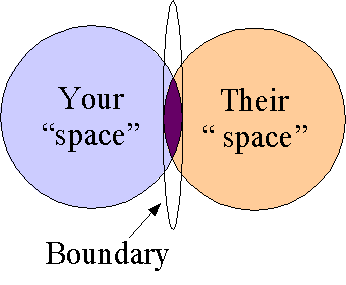
Does your hospice-palliative care organization have clear guidelines regarding boundaries for volunteers? If not, consider creating or modifying them to prevent future problems. Mount Allison University in Canada researched this ethics concern with two community-based hospice programs. When 79 hospice-palliative volunteers responded to a 27-item Boundary Issues Questionnaire, they indicated the boundary of each item. These are examples of one item in each of the three major categories:

Definite Boundary Issues
(things volunteers should never do).

1) Accept money from a patient or family.

Potential Boundary Issues
(things volunteers should stop and think twice about doing)

2) Accept a gift from a patient or family.

Questionable Boundary Issues
(things volunteers should be aware of doing)

3) Give your home phone number to a patient or family.

Would you agree with the three major labels? What are other items that volunteers might place under the three various categories? It would be interesting to know what volunteers perceive as their individual items of concerns and how they differ or agree on the boundaries relating to various items.

This research confirms the need for official boundary statements. This is information volunteers can benefit from through discussion and implementation with written policies. Keep in mind that having no clear boundary policies may lead to negative consequences later.

Frances Shani Parker, Author
Becoming Dead Right: A Hospice Volunteer in Urban Nursing Homes is available in paperback at many online and offline booksellers and in e-book form at Amazon and Barnes and Noble booksellers.

Thursday, June 2, 2011

Volunteer Program for Older Adults: RSVP (Retired and Senior Volunteer Program, Video 3:45)

Years ago, I shared a conference keynote speaking engagement with Arun Gandhi, Mahatma Gandhi’s grandson. Although we had not met before, we both spoke highly and at length about how our grandparents’ example had inspired us to embrace service.

Mahatma Gandhi was the spiritual leader of India during the Indian independence movement against foreign domination. He implemented a nonviolent philosophy of civil disobedience that inspired civil rights movements globally. Growing up in apartheid South Africa, Arun Gandhi had already learned from his grandfather the power of transforming the opponent through love and suffering.

My grandmother modeled service in her daily living. I observed her caring for others many times in ways such as giving food to strangers who knocked on her door. I recall comments some observers made about how she was being used, and she shouldn’t be giving her food away to strangers. But I saw her smiling as she looked out the window and watched recipients gobbling up her sandwiches and fruit. And she kept right on giving, never knowing that one day her granddaughter would praise her on something called the Internet. If she were alive today, she would be telling everybody at her church.

Thank goodness for all the older adults who continue to strive to make the world a better place by giving service to others. Fortunately, they don’t have to look far to find an organization like RSVP that can channel their enthusiasm into volunteer programs where their many skills can be matched appropriately with others’ needs. RSVP means Retired and Senior Volunteer Program. This federal program, which partners with local agencies across most states, is administered locally by both public and private organizations that serve the public in some way. Because of the wide range of services available, over 500,000 RSVP volunteers choose services they feel confident and comfortable in doing. Free training is included when necessary.

Of course, true service is always a win-win opportunity. Volunteers benefit with improved self-esteem, better health, more social interactions, and more learning experiences. They can also get reimbursed for some job-related costs. Research studies indicate that volunteering leads to a more positive mental attitude and to a longer life. This video explains the many services and rewards of volunteering with RSVP:


Frances Shani Parker, Author
Becoming Dead Right: A Hospice Volunteer in Urban Nursing Homes is available in paperback at many booksellers and in e-book form at Amazon and Barnes and Noble booksellers.

Thursday, May 26, 2011

Should Hospice Prison Inmates Be Released Early? (Video 1:56)

Quality end-of-life care in prison continues to grow as more prisons establish hospice programs, particularly for an aging prison population. Inmate hospice volunteers play an important role. If a terminally ill patient is in prison, attentive caregiving can be especially beneficial when given by familiar faces of those who have also experienced the prison system.

Controversial discussions continue to surround the topic of early release options for older adult inmates who are infirm and ill. Referred to as “compassionate release” and “medical parole,” supporters feel that placing these inmates in private medical facilities would be more cost effective for the prison system, especially for prisoners serving life terms and no longer considered a danger to society. Others who support victims of heinous crimes are adamant that prisoners should serve their life terms in prison regardless of their age and severity of their illness. What do you think?

Note: Grace Before Dying by Lori Waselchuk is an award-winning photographic documentary that chronicles the prison-run hospice at Angola State Penitentiary in Louisiana. She photographed the picture of the two men above. Read more about her work here.

This video presents the pros and cons of early release of aging, infirm, and ill inmates who are housed at the California Medical Facility where a hospice unit currently provides end-of-life care. 


Frances Shani Parker, Author
Becoming Dead Right: A Hospice Volunteer in Urban Nursing Homes is available in paperback at many booksellers and in e-book form at Amazon and Barnes and Noble booksellers.

Friday, May 20, 2011

Grief Support for Co-Workers and Classmates (Video 1:05)

Comforting co-workers and classmates who are struggling with grief symptoms is uncomfortable for many people. While they may have good intentions, they often lack confidence regarding what to say or do that will help mourners adjust to a loss. At the workplace and at school, many staff members and classmates may feel that only experts should handle grief support. Worried that they might cause hurt feelings, they may remain distant from those mourning. Holding back their support, however, can negatively impact their colleagues who are suffering.

Although counselors and others trained in grief management play an important role, colleagues can also make beneficial contributions. Workshops, meetings, and classes at the workplace and at schools should include time for sharing strategies everyone can incorporate to alleviate grief as a community representing individuals of the organization. Implementation of these strategies can help create workplace and school cultures where everyone feels inspired to support one another in whatever ways they can during times of grief.

Sandi Sunter, director of community development for the Hospice of the Florida Suncoast, offers suggestions for coping with a co-worker’s death 
in this video titled “Hospice Care & Grief Counseling: Dealing With a Co-Worker's Death.


Frances Shani Parker, Author
Becoming Dead Right: A Hospice Volunteer in Urban Nursing Homes is available in paperback at many online and offline booksellers and in e-book form at Amazon and Barnes and Noble online stores.

Friday, May 13, 2011

Approaching Death: Dying Symptoms, Caregiver Support (Video 5:31)

The body knows when it’s time to slow down and die. Each body will die in its own way and in its own time when the process starts. I have been asked on several occasions to explain some of the circumstances that may be present when death is near. This excerpt from my book Becoming Dead Right: A Hospice Volunteer in Urban Nursing Homes addresses that:

“Among symptoms of impending death, there might be decreases in food intake, swallowing, communication; and increases in sleep, weakness and spiritual awareness. The latter might include speaking to or appearing to look at, or dreaming about persons who have already died. Patients may become incontinent, agitated, confused, withdrawn, and congested. Bright light in patients’ eyes should be avoided. Patients should be turned gently when necessary. Hospice care should provide every reasonable effort to control pain and stabilize patients to a plateau of comfort. The hospice nurse or doctor can explain any changes that cause concern during the dying process.

Some caregivers become upset when dying patients lose their appetites. Because they view food as nurturing, they want to keep giving patients more food than they need. It is important to keep in mind that dying patients with little or no appetite are not starving or in pain from hunger in the manner that is commonly understood. They are responding normally to the body’s breaking down as part of the dying process. Swallowing may be difficult for them and could lead to choking when food is forced into their mouths. They could also become nauseous and vomit from being forced to take in food they do not want. Dying patients may also want less to drink. The insides of their mouths can be moistened with droplets or a fine spray, and a lip cream can be used, especially if they are breathing through their mouths. It is not unusual for breathing of dying patients to fluctuate from quiet to noisy or to have an irregular rhythm."

As much as possible, caregivers should remain calm and give patients reassuring presence. This video titled “Palliative Curriculum - Part 6 - Last Hours of Living” presents a scenario about a daughter’s concerns during her mother’s final days.


Frances Shani Parker, Author
Becoming Dead Right: A Hospice Volunteer in Urban Nursing Homes is available in paperback at many booksellers and in e-book form at Amazon and Barnes and Noble booksellers.

Friday, May 6, 2011

Fears of Lesbian, Gay, Bisexual, and Transgender (LGBT) Older Adults: Healthcare Staff Training and Housing (Research, Video 5:11)


Lesbian, gay, bisexual, and transgender (LGBT) older adults living in nursing homes, long-term care, assisted living, and even those receiving home care from healthcare workers have increasingly been discriminated against and abused by staff and fellow residents. Damage to their emotional and physical health has been so devastating that some LGBT residents have resorted to suicide.

In a study at Yeshiva University in New York, elderly participants in community and long-term care settings reported the following fears:
1) Fear of being rejected or neglected by healthcare providers, particularly personal care aides
2) Fear of not being accepted or respected by other residents
3) Fear of having to go back into the closet and pretend their sexual orientation is different

Important solutions to this problem include a national drive to train long-term care providers in equitable and compassionate care. University of Iowa findings from a nationally representative mail-in survey of over a thousand nursing home and social service directors revealed that three-fourths of the sample had not received even one hour of homophobia training over the past five years. Directors with the most experience reported having the least training. More development and dissemination of homophobia training is critically needed along with policy changes that positively impact the quality of life of LGBT older adults.
A move for separate, but equal housing is another solution that has been implemented to counteract the inequities many LGBT seniors experience. The nonprofit, 104-unit Gay and Lesbian Elder Housing (GLEH) Triangle Square in Los Angeles, California is the first affordable housing facility for lesbian and gay seniors. “A Place To Live - The GLEH Triangle Square Story,” a film by Carolyn Coal and Cynthia Childs, chronicles the journey of seven seniors attempting to secure a home there before it opened a few years ago.


Frances Shani Parker, Author
Becoming Dead Right: A Hospice Volunteer in Urban Nursing Homes is available in paperback at many booksellers and in e-book form at Amazon and Barnes and Noble booksellers.